Your cart is empty

1
/
of
1
Peptagenix
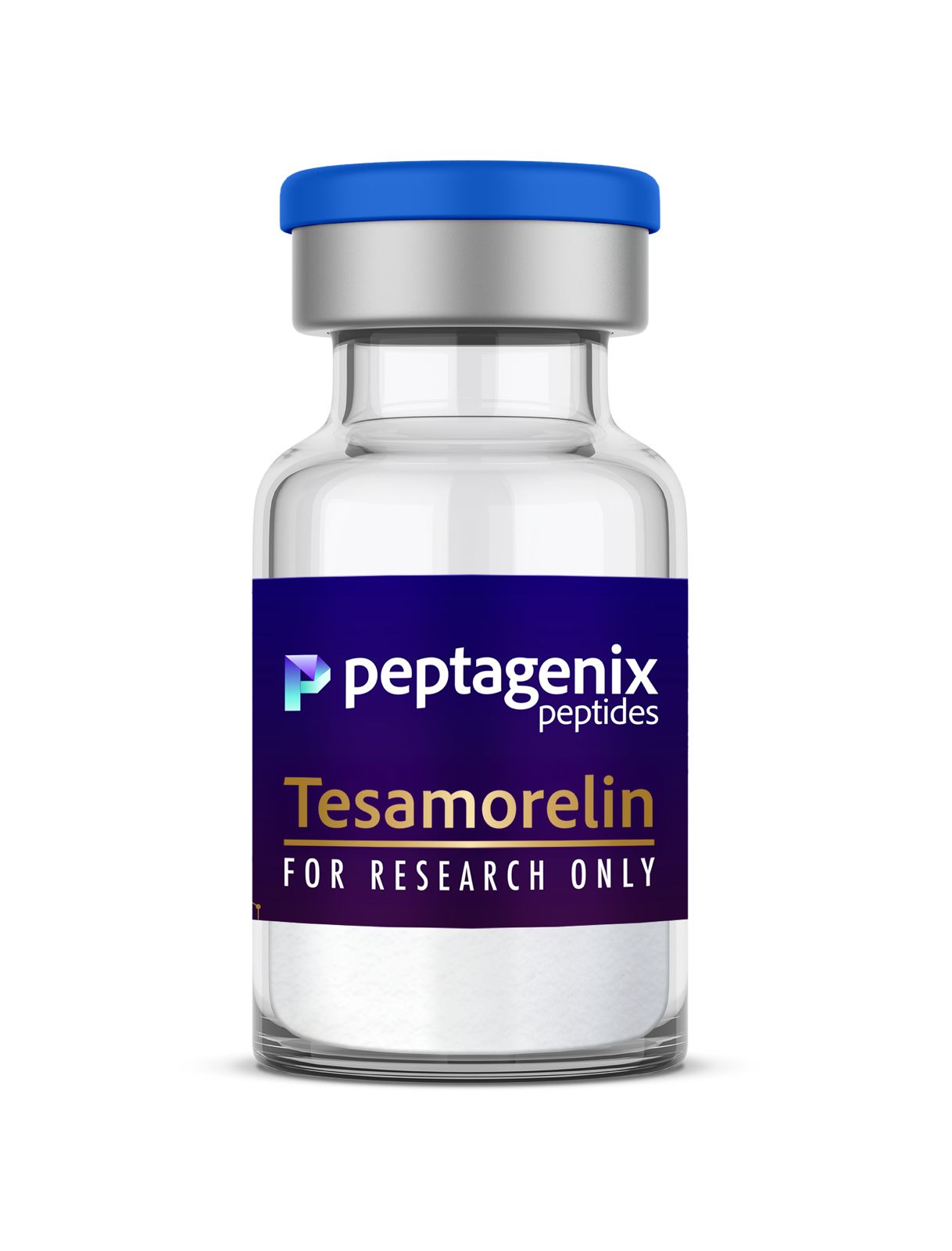
Tesamorelin 10mg
Tesamorelin 10mg
Regular price
£59.99 GBP
Regular price
Sale price
£59.99 GBP
Taxes included.
Quantity
Couldn't load pickup availability
+
Tesamorelin 10mg Overview
Tesamorelin can help stimulate human growth hormone production, patients can experience several benefits from using Tesamorelin for fat loss, such as:
Significant IGF-1 increase
Reduced visceral fat
Increased muscle mass
Reduced liver fat
Improved cardiovascular health
Reduced LDL cholesterol
Improved cognitive function
Accelerated recovery time after workouts
Tesamorelin can also produce notable improvements in cognitive function for healthy adults and seniors with early signs of dementia.
Tesamorelin 10mg is a polypeptide composed of 44 amino acids derived from GHRH, specifically modified with the addition of trans-3-hexanoic acid to the peptide’s sequence. This modification enhances the compound’s stability in human plasma and prolongs its half-life. Studies have demonstrated that Tesamorelin is effective in reducing visceral adiposity in patients with lipodystrophy, leading to its approval for clinical use in the United States in 2010. Developed by Theratechnologies, Inc., it was not designed for weight loss or obesity treatment but specifically targeted towards reducing excess abdominal fat associated with HIV medication-induced lipodystrophy. Its primary effects are related to glucose and lipid metabolism, and it is currently being assessed as a treatment for insulin resistance, nonalcoholic fatty liver, peripheral nerve regeneration, and cardiovascular diseases. Research Confirmed Effects
- Tesamorelin in Lypodystrophy
Tesamorelin, a synthetic analogue of growth hormone-releasing factor, addresses excess visceral adipose tissue (VAT) in patients with HIV-associated lipodystrophy, a condition characterised by changes in body composition, including lip hypertrophy. Lipodystrophy adversely affects patients’ quality of life and is often linked to antiretroviral therapy (ART), particularly protease inhibitors. The efficacy of tesamorelin in reducing VAT has been demonstrated through randomised Phase 3 trials, showing significant reductions in VAT levels over six months of treatment. Notably, patient characteristics such as metabolic syndrome, elevated triglyceride levels, and being of white race are associated with a higher likelihood of VAT reduction following tesamorelin therapy. Tesamorelin’s approval in 2010 marked a significant advancement in the treatment of HIV-associated lipodystrophy, offering a targeted therapeutic approach to reduce excess adiposity in affected patients. Before its availability, treatment options for lipodystrophy were limited, often relying on lifestyle modifications and surgical interventions that had varying degrees of success. Tesamorelin’s effectiveness in reducing visceral adipose tissue (VAT) by nearly 20% surpasses that of other available therapies, establishing it as a valuable intervention for managing lipodystrophy-related complications in HIV-infected patients. Therefore, tesamorelin is four times more effective in reducing adiposity.
- Tesamorelin in Cardiac Disease
HIV patients face an increased risk of developing cardiovascular disease (CVD), primarily due to abnormal fat deposition and the effects of antiretroviral drugs. Tesamorelin has shown efficacy in reducing visceral adipose tissue (VAT) and improving metabolic parameters in HIV-infected patients with treatment-associated central fat accumulation. In a 26-week randomised trial involving 412 patients, daily subcutaneous injections of tesamorelin led to a significant reduction in VAT of 15.2%, compared to a 5.0% increase in the placebo group. Furthermore, tesamorelin treatment enhanced triglyceride levels, improved the total cholesterol to HDL cholesterol ratio, and increased insulin-like growth factor I (IGF-I) levels. These metabolic benefits, including reduced VAT and improved lipid profiles, indicate a potential therapeutic role for tesamorelin in managing central fat accumulation in individuals infected with HIV. Additionally, responders to tesamorelin therapy, defined as those achieving a≥8% reduction in VAT, experienced greater decreases in triglyceride levels and enhancements in glucose homeostasis compared to nonresponders over a 52-week treatment period. Notably, tesamorelin’s effects on metabolic parameters are linked to the percentage change in VAT, indicating a direct relationship between VAT reduction and metabolic improvements. These findings highlight the potential of tesamorelin to not only reduce visceral adiposity but also lessen cardiovascular risk factors in HIV-infected patients, presenting a promising therapeutic strategy beyond conventional interventions like statins.
-
- Tesamorelin and GH Deficiency in HIV Patients
Highly active antiretroviral therapy (HAART) is associated with several endocrine and metabolic complications, including altered pituitary growth hormone (GH) secretion in human immunodeficiency virus (HIV) infection, with about one-third of patients showing biochemical GH deficiency (GHD). Patients with HIV frequently experience reduced spontaneous GH secretion and diminished GH response to stimuli, particularly those with HIV-related lipodystrophy, potentially due to factors such as fat accumulation. Although the precise mechanisms underlying GHD in HIV patients are complex and not fully understood, tesamorelin, a GH-releasing hormone analogue, demonstrates promise in reducing visceral fat in HIV-infected individuals with lipodystrophy, providing a safer alternative to high-dose recombinant human growth hormone with fewer side effects.
- Tesamorelin and Peripheral Nerve Regeneration
Peripheral nerve injuries result in motor and sensory deficits, with limited therapeutic options available. Growth hormone (GH)-based therapies promise to accelerate axonal regeneration and reduce atrophy of denervated muscle and Schwann cells (SCs) prior to reinnervation, potentially enhancing outcomes post-surgery. GH-based treatments target multiple tissues involved in nerve regeneration, providing multi-modal mechanisms and possible secondary benefits for bone, tendon, and wound healing. FDA-approved drugs that augment the GH axis support potential clinical translation for treating peripheral nerve injuries. Research indicates that GH manipulation, such as with tesamorelin, may improve outcomes, presenting possible FDA-approved interventions for this challenging condition.
- Tesamorelin in Dementia
The study conducted at the University of Washington School of Medicine involved thirty adults, including those with mild cognitive impairment (MCI), who self-administered daily subcutaneous injections of tesamorelin or a placebo for 20 weeks. Brain magnetic resonance imaging and spectroscopy protocols, cognitive testing, and blood sampling were performed at baseline and at weeks 10 and 20, along with glucose tolerance tests before and after the intervention. Results showed increased GABA levels in all brain regions, elevated NAAG levels in the frontal cortex. They reduced MI levels in the posterior cingulate after 20 weeks of GHRH administration, suggesting a potential mechanism for the favourable effects on cognition observed in adults with MCI and older adults. This evidence supports the effectiveness of GHRH analogues, such as tesamorelin, in enhancing cognition during the early stages of dementia, suggesting a potential treatment avenue. The findings highlight the modulation of inhibitory neurotransmitter and brain metabolite levels as a mechanism underlying the cognitive benefits observed with GHRH administration. These results not only offer promise for the treatment of dementia but also suggest new directions for research in the quest for a cure or preventive measures against cognitive decline. Legal and Safety Notice: Peptagenix only offers Tesamorelin solely for research and scientific applications. In support of the research community, we ensure our products comply with all quality and legal standards. Please be advised that Tesamorelin and other peptides we provide are not intended for human use, diagnostic, or therapeutic purposes. For premium-quality, Tesamorelin for your UK-based research needs, explore our peptide selection for scientific excellence and integrity.
Share